
Author: Tomfon Ngangyet
Category: Agriculture & Regional Development
Keywords: Meta palm oil, Robusta coffee Cameroon, livestock farming Meta, Tad Marketplace, agricultural value chains, Momo Division
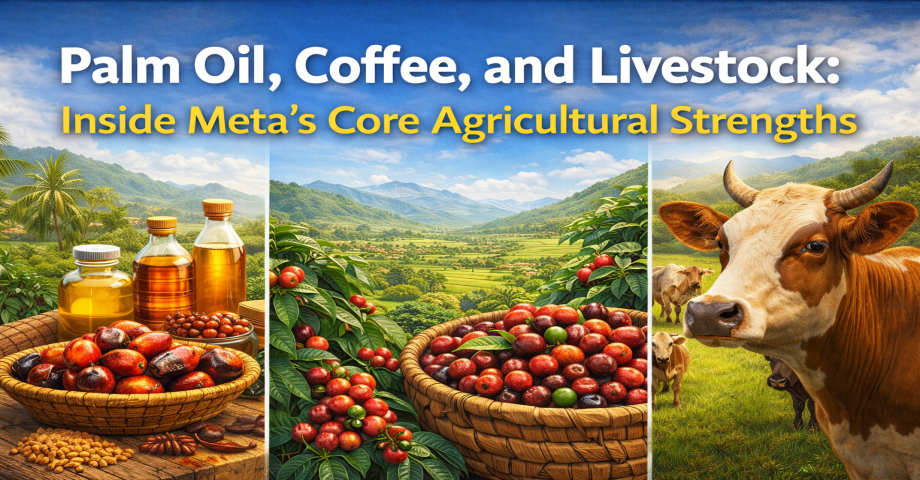
The Meta region of Momo Division, Cameroon, is one of the country’s most resource-endowed agricultural zones. For generations, agriculture has served as the backbone of local livelihoods and regional trade. Among its most important pillars are palm oil, coffee, and livestock—three sectors that continue to define Meta’s economic identity and long-term development potential.
This article explores how these core agricultural strengths contribute to regional value chains and how structured market systems, such as Tad Marketplace, are helping transform production into sustainable economic activity.
Palm oil is one of the most important agricultural products of the Meta region. Locally known and widely referred to as Meta Palm Oil, it is recognized within Cameroon and neighboring areas for its quality, traditional processing methods, and cultural significance.
Produced mainly by smallholder farmers using traditional knowledge
Central to household income and local commerce
Widely used for food, trade, and small-scale agro-processing
Palm oil production supports a wide network of farmers, processors, and traders, making it a cornerstone of Meta’s rural economy. With improved organization, sustainable practices, and better market access, palm oil holds strong potential for value addition and formalization.
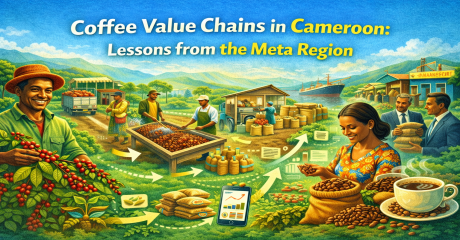
Coffee has historically been a major economic driver in the Meta region. During peak periods, the former Nyen Cooperative reportedly produced more than 1,000 tons of coffee annually, while broader regional production reached up to approximately 7,000 tons of Robusta coffee per year.
Favorable agro-ecological conditions for Robusta coffee
Established farming knowledge and experience
Strong historical integration into regional and national markets
Although current production levels differ from historical peaks, this legacy demonstrates the region’s proven capacity for coffee cultivation. With modern agronomic practices, structured aggregation, and compliant market access, coffee remains a critical component of Meta’s agricultural future.
Livestock farming is another essential pillar of Meta’s agricultural system. The region benefits from extensive grazing land, supporting cattle, goats, sheep, and other livestock.
Provides protein and food security
Generates income for rural households
Supplies markets such as Tad Marketplace
Supports regional trade and commerce
Livestock production complements crop farming by diversifying income sources and strengthening local food systems.
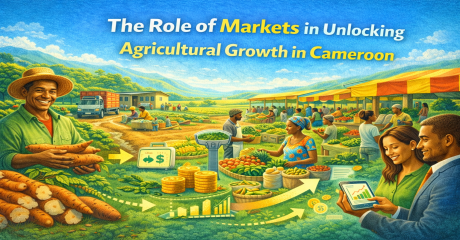
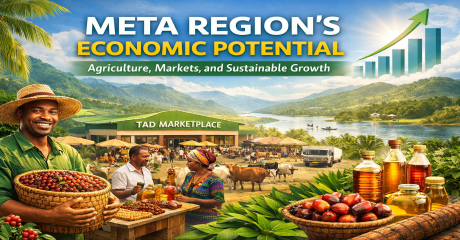
Agricultural strength alone does not create prosperity without access to markets. Tad Marketplace, located in Meta, plays a vital role in connecting farmers, traders, and consumers across Momo Division.
Through Tad Marketplace:
Palm oil, coffee, livestock, and other products are aggregated
Trade becomes more organized and transparent
Value chains are strengthened across the region
As market infrastructure improves, Tad Marketplace has the potential to become a regional hub for agricultural trade and value-chain integration.
Palm oil, coffee, and livestock together form a balanced agricultural system—combining cash crops, food production, and trade. Sustainable development of these sectors depends on:
Responsible land and environmental management
Farmer participation and capacity building
Market-driven, compliance-aligned initiatives
Infrastructure that supports aggregation and logistics
Organizations like Meta Cooperation Company PLC (MCC PLC) play a role in supporting structured approaches that emphasize transparency, sustainability, and long-term value creation.
Meta’s agricultural strength lies not in a single product, but in the combined power of palm oil, coffee, and livestock, supported by active markets such as Tad Marketplace. Together, these sectors reflect the region’s resilience, heritage, and economic promise.
With thoughtful planning, community engagement, and market integration, Meta’s agricultural foundation can continue to drive sustainable growth and regional development for generations to come.
This article is for informational purposes only and does not constitute financial, investment, or commercial guarantees. Agricultural outcomes depend on market conditions, environmental factors, and regulatory frameworks.